
Case study: Hudood social platform
Hudood. A social world, built end to end.
A social-first platform for posts, profiles, reels, and conversations, with mobile, web, moderation, and an integrated finance layer.
 Design, engineering & infrastructure · Team Zawish
Project details
Platform tour
Meet Hudood, from the feed to the infrastructure.
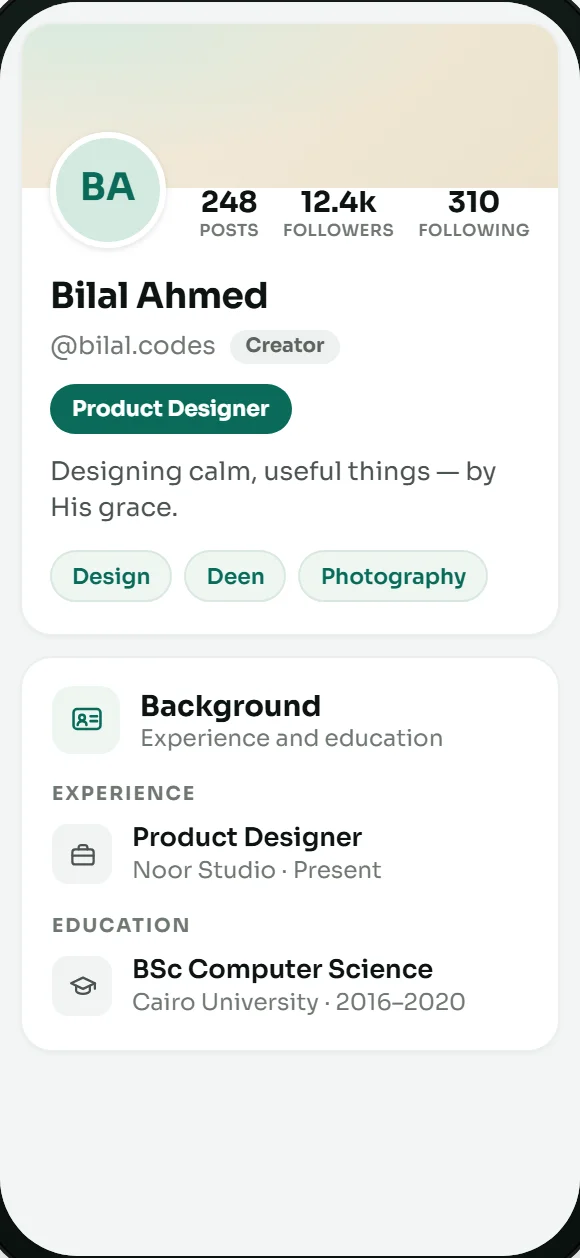
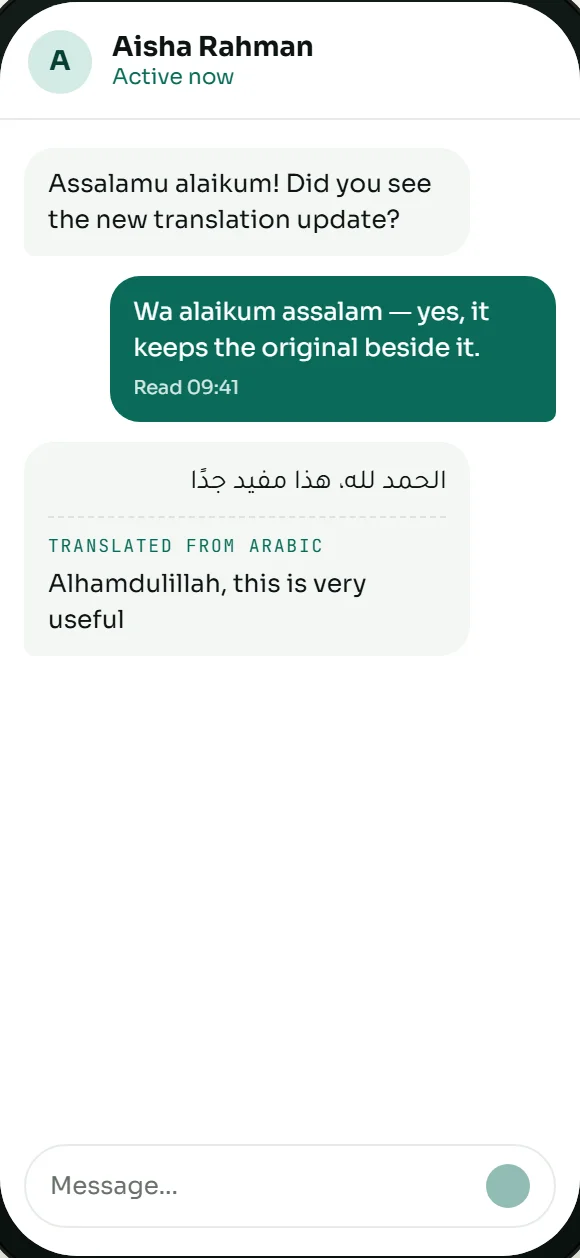
Step through the product surfaces and see which simplified service boundaries support each feature.
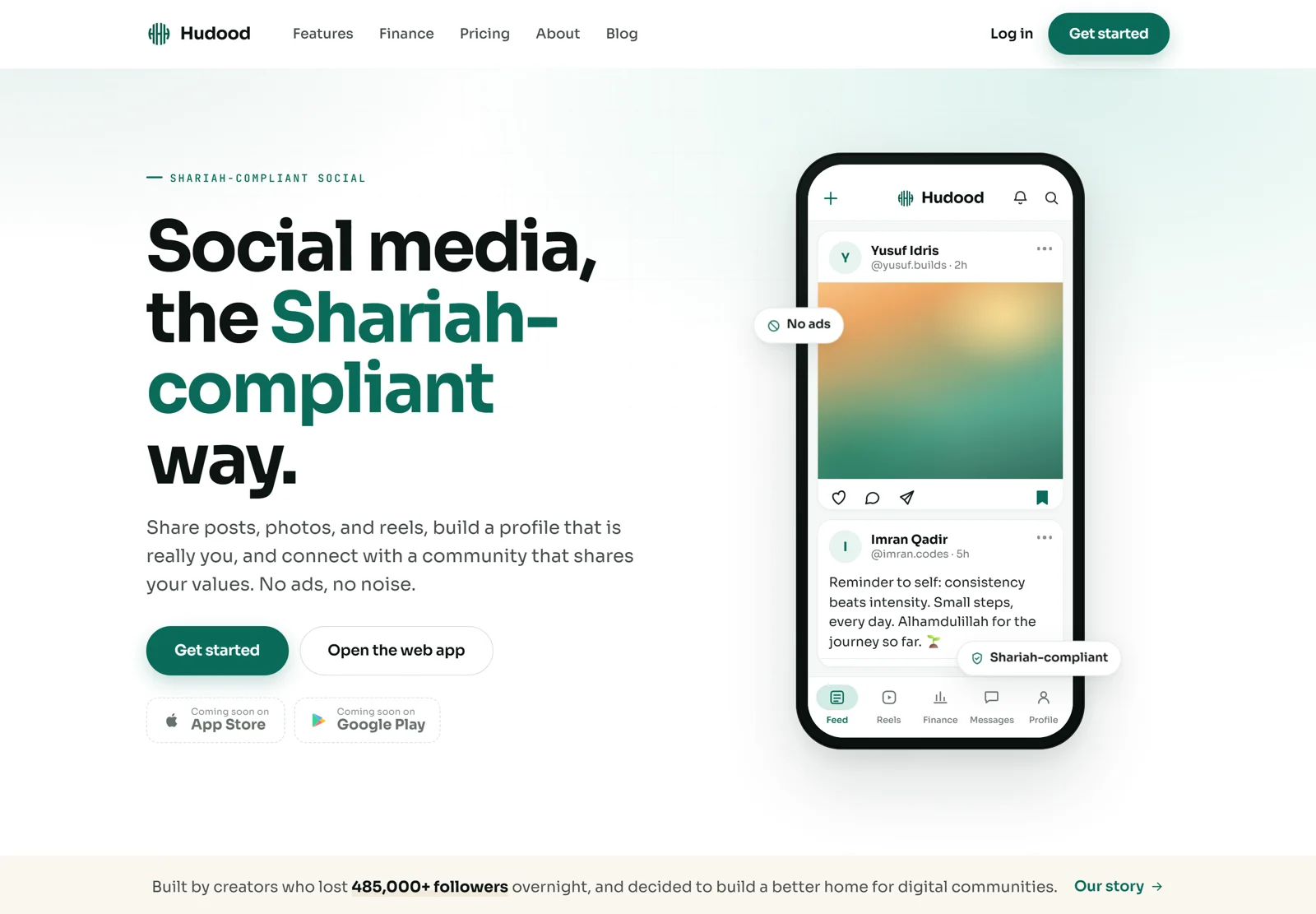
HUDOOD / END-TO-END DELIVERY
From community identity to the services behind every interaction.
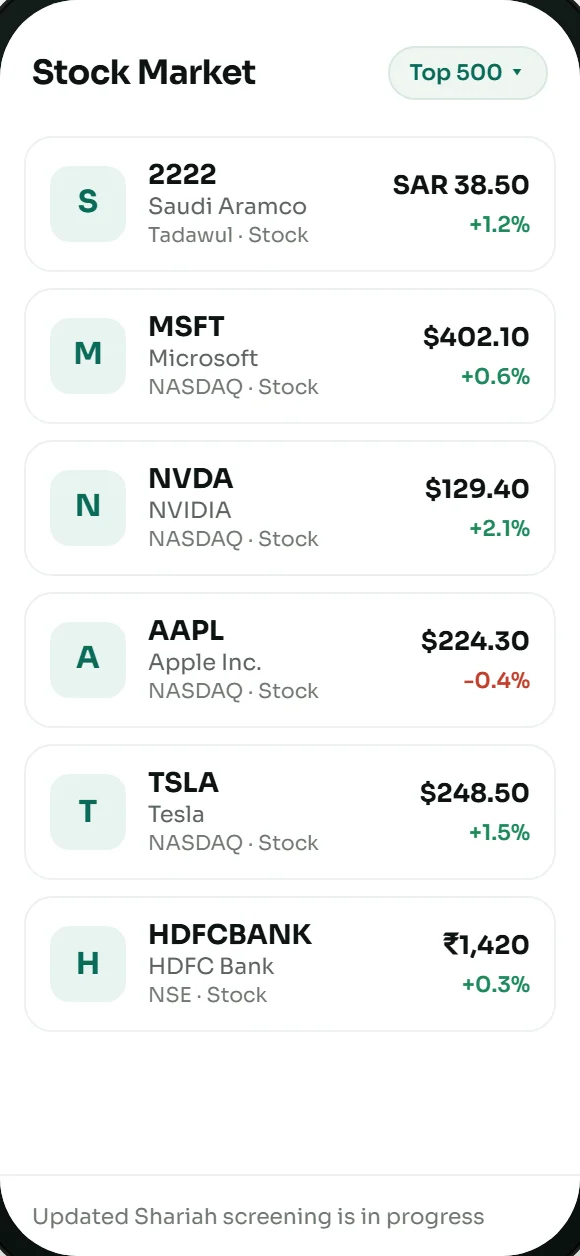
ZAWISH designed and built the mobile app, web experience, service layer, moderation tools, and infrastructure, integrating the established financial engine.
Visit Hudood ↗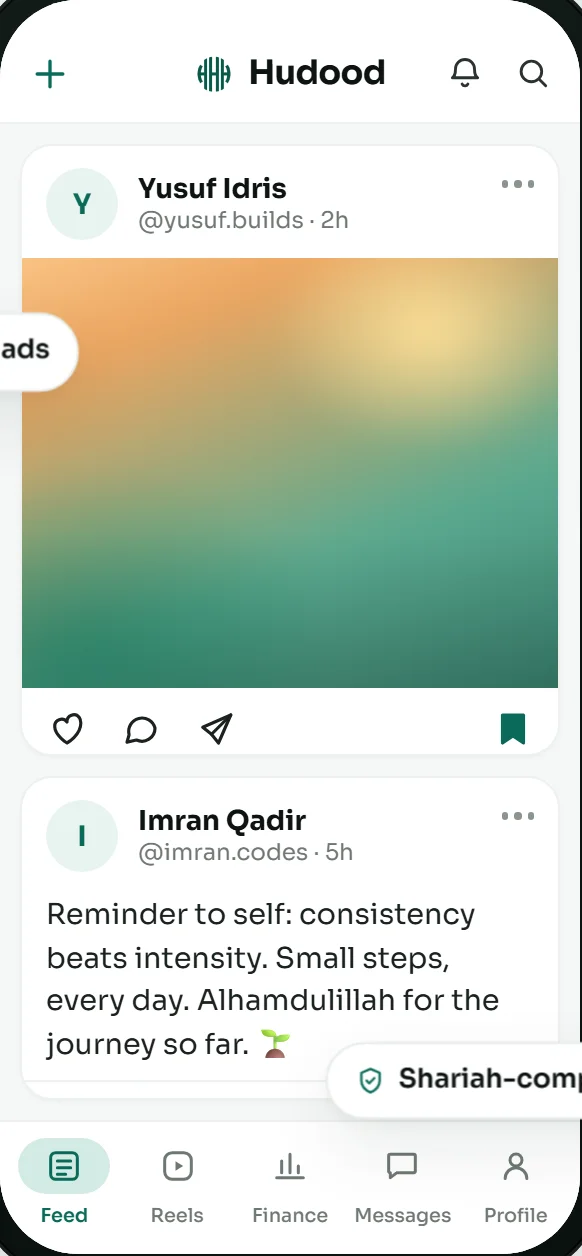

Community moderation
- Review report
- Record decision and reason
- Handle appeal
Workflow summary, not a capture of the private admin console.
Previews from Hudood’s public site, not private-account captures.
Explore the services behind this feature
Scroll sideways to explore the enlarged map.
Read the components
The mobile app, web app, and admin console connect to the social API and finance engine. Shared data, a media-processing queue, and storage support those services.
- Mobile app
- Flutter
- Web app
- Next.js
- Admin console
- moderation
- Social API
- NestJS
- Finance engine
- PHP
- MySQL
- shared schema
- Redis queue
- BullMQ workers
- Storage
- Azure Blob
The problem
An entire social experience. One connected platform.
The product already handled Shariah screening, portfolios, and Zakaat tools. The next release needed social feeds, profiles, messaging, moderation, and mobile access without breaking the finance engine people already relied on.
ZAWISH made a Flutter mobile app, web experience, moderation console, and service layer that share identity and data with the existing product.
The system
How it fits together.
Scroll sideways to explore the enlarged map.
Read the components
The mobile app, web app, and admin console connect to the social API and finance engine. Shared data, a media-processing queue, and storage support those services.
- Mobile app
- Flutter
- Web app
- Next.js
- Admin console
- moderation
- Social API
- NestJS
- Finance engine
- PHP
- MySQL
- shared schema
- Redis queue
- BullMQ workers
- Storage
- Azure Blob
simplified public map of implemented components and boundaries
The build
How the new and existing services work together.
One database, two owners
An auth bridge across generations
Media work stays off the feed request path
Three surfaces, one contract
Implementation evidence
Constraint
A new service layer had to coexist with a legacy finance engine and a shared data model.
Tradeoff
The architecture preserves working legacy logic while new product surfaces move onto a typed API and queued workers.
Public evidence is limited to approved screens, system boundaries, and implementation details; client and commercial results are not asserted.
For your business
Discuss a related system.
The case study shows product surfaces and a simplified architecture. It does not expose private administration data or claim public adoption metrics.